
Wort Cunning
The Old English art of plant magick, the history, folklore, and practices of cunning folk, and why you don't have to be a witch to be one

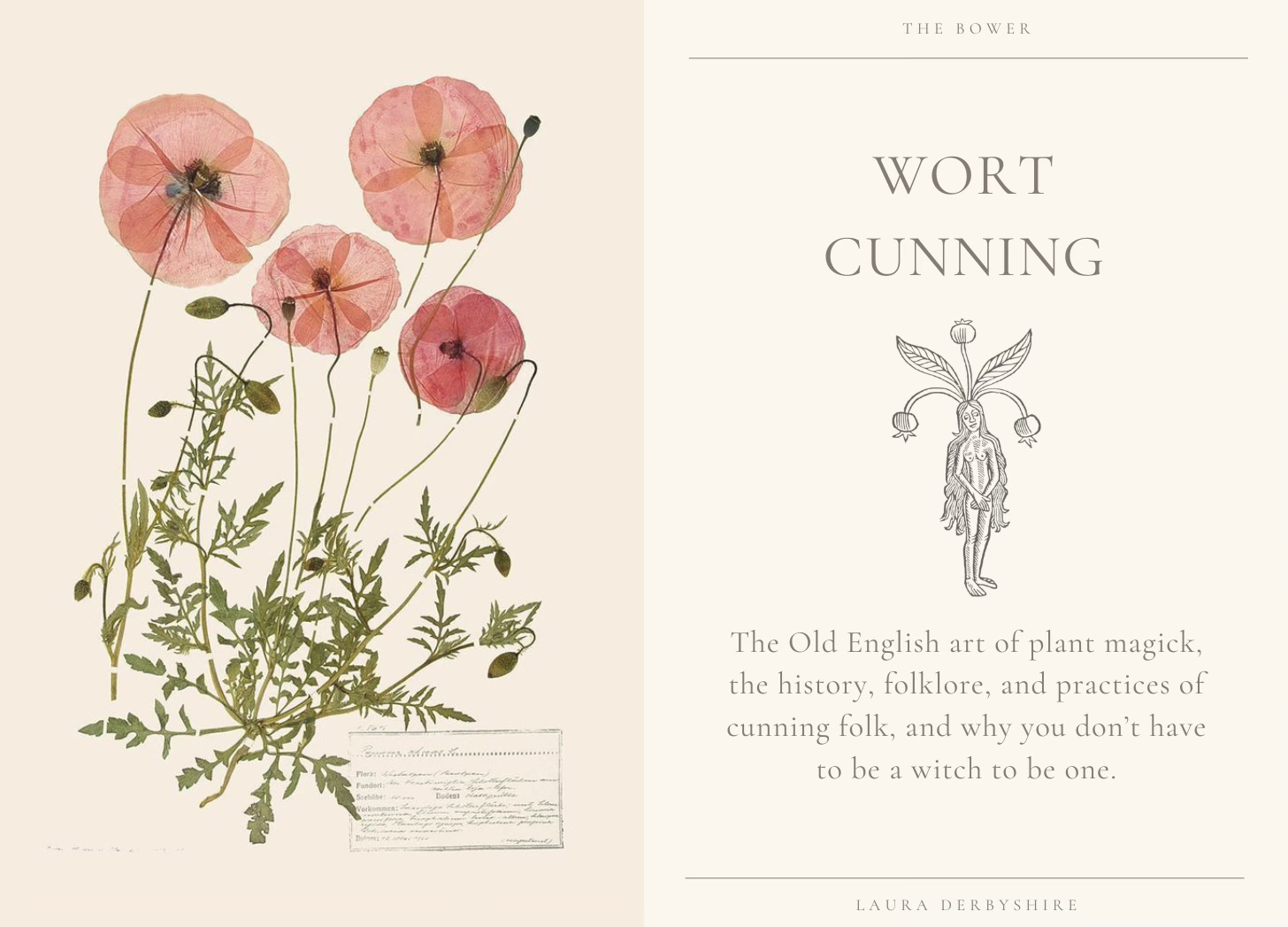
Wort cunning is an Old English term for the knowledge of plants, to me it brings about images of old women rubbing green salve onto people’s knobbly hands (I’ll explain why this is partly true later), but really it is an old craft grown from medicine and folk magick, not quite herbalism, or botany, but more like ‘knowing’ the plants in your local landscape so intimately that you can use them to heal, to protect, to banish, to bring, to charm, and to communicate.
Welcome to another essay from The Bower, if you’ve been here a while you’ll know that I LOVE to deep dive into the history, folklore, philosophy, and science of a magickal practice so I can really give you a thorough understanding of it. Today we are going to look at where the term ‘wort cunning’ comes from, what it meant to the people that coined and used it, how the modern witch can practice wort cunning today, but also why this is a great practice for those who don’t want to label themselves as witch, or anything.
Learning about wort cunning changed my magickal practice for the better, I started to see plants less as ingredients on a shopping list and more as singular spirits to get to know and to work with, it now feels like such a richer experience.
The Etymology:
Wort comes from the the Old English word ‘wyrt’, which means ‘plant’, super simple. It is my understanding that it’s a word used to describe a plant in use, so as medicine for example. You will see the word wort in many of the names of the plants that we are familiar with in our practice like mugwort and bladderwort.
Cunning is a little tricker to pin down as a word as we often use it to describe the character of someone who is a bit sly and calculating, and it is often spoken in a negative way, but cunning really means that you are skilful or learned and it comes from the Old English ‘cunnan’ which means ‘to know’. It is a root word that paved the way forward to give us can and ‘ken’ (if you’re Scottish) meaning to ‘know’.
It is a very poetic way of looking at what it means to be knowledgeable, we can learn all we can about calendula but to be cunning in it means to know how it smells when you crush it, to know to pick it on a warm day to extract its oils, how long it takes to dry, to know what ratio is needed if using it in an ointment.
Wort cunning, as a term put together, simply means having practical knowledge of plants, but I think there is a little more to it than that…
Magickal Medicine:
Our modern way of living makes it difficult to comprehend that the medicinal properties of a plant and its magickal properties are not two separate things. When cunning folk would give sick people tonics made from certain plants it settled a fever but also stopped the malevolent spirit that caused it in the first place, it also warded the patients from further attacks. The Lacnunga combines medicine and magick in plain terms, it is an 11thC Anglo-Saxon manuscript that contains the Nine Herbs Charm/Spell and many other remedies, it is a beautiful book that contains a micx of recipes, prayers, invocations and advice like dealing with sudden stabbing pains by boiling feverfew, dead nettle, and plantain in better, and also dealing with a delayed birth by doing several things such as drinking milk and stepping three times over a grave and once over your husband… super specific right?
The Lacnunga and other Anglo Saxon medical manuscripts are fascinating and also very entertaining, and we will come back to them in another essay, but for now we will briefly take a look at the most famous fragment of it, ‘Nigon Wyrta Galdor’ or the ‘Nine Plants Spell’.
It addresses the plants by name, starting with Mugwort, and then speaks to each plant and asks them to remember what it is they are known for. It cements the animist view that these plants are spirits and not just mere tools, that they have a will of their own.
This is the view that cunning folk held, they built working relationships with these plants and after slowly learning their habits and usage they knew what plant would work in specific and unique situations.
Who Were the Cunning Folk?
The cunning folk were a sort of practitioner in Britain and Ireland, and much of Europe, and they worked throughout history all the way up to the early twentieth century, I would argue that they would be well within living memory in some rural places who still would have had use for them, and would have sought them out for various folk medicines/services.
They had many different names such as cunning wo/man, wise wo/man, conjurers… in Wales, where I hail from, there were men known as the dynion hysbys (the knowing ones), would would be called upon in crises, if things were lost, if people or their livestock fell ill, they removed curses, and were overall just a vital part of the community.
Just a little clarification, wart charming is not the same as wort cunning, but in practice wart charming was a heavily requested service that the cunning folk offered. Literal warts (the growths on skin, usually hands) would be rubbed with a plant-based ointment, and then the ingredients would be buried in the hopes that as they decayed and disappeared, so too would the wart.
This part is important to remember, especially in the context of the horrendous witch hunts and trials that killed so many innocent people, common people generally did not consider cunning folk to be witches. Even though their practice overlaps considerably with what witch trial accounts describe, they were often the ones people sought out to help against witches. This distinction is really interesting and can sometimes cause a bit of discourse in online witchy spaces, modern witchcraft uses the title of ‘witch’ so intensely that it appears to have forgotten that other practices came before it. Thanks to the witch trials and the rise of professional medicine there seems to have been a great split between people and the natural world, and with that we have lost a very special way of ‘knowing’. The wort cunner knew so much about her plants because she was around them all of the time, the elder tree next to her home had been there before her mother way born, she knew it intimately, has played beneath its boughs when it was in flower, and picked its berries when it was in fruit, she knew when the berries were perfectly ripe, and recognised the signs that it might enter a fallow year.
This sort of knowledge is so hard to gain because so many of us have moved several times, or our fields and hedgerows have been torn up to build ugly housing estates, as a result I think people struggle to build a relationship with their local plants.
I’m not saying this to be a downer, I am saying it because I recognise the longing that people have, the pull that people feel to little witchy cottages with herbs hanging in the window. I think it is less about yearning and more about a grief, that some people feel terribly the absence of something our 4x great grandmother took for granted. Whilst there isn’t a word to describe this ache, we instead reach for aesthetics to try and capture that feeling, really we should be adopting and adapting the practice of wort cunning for modern times…
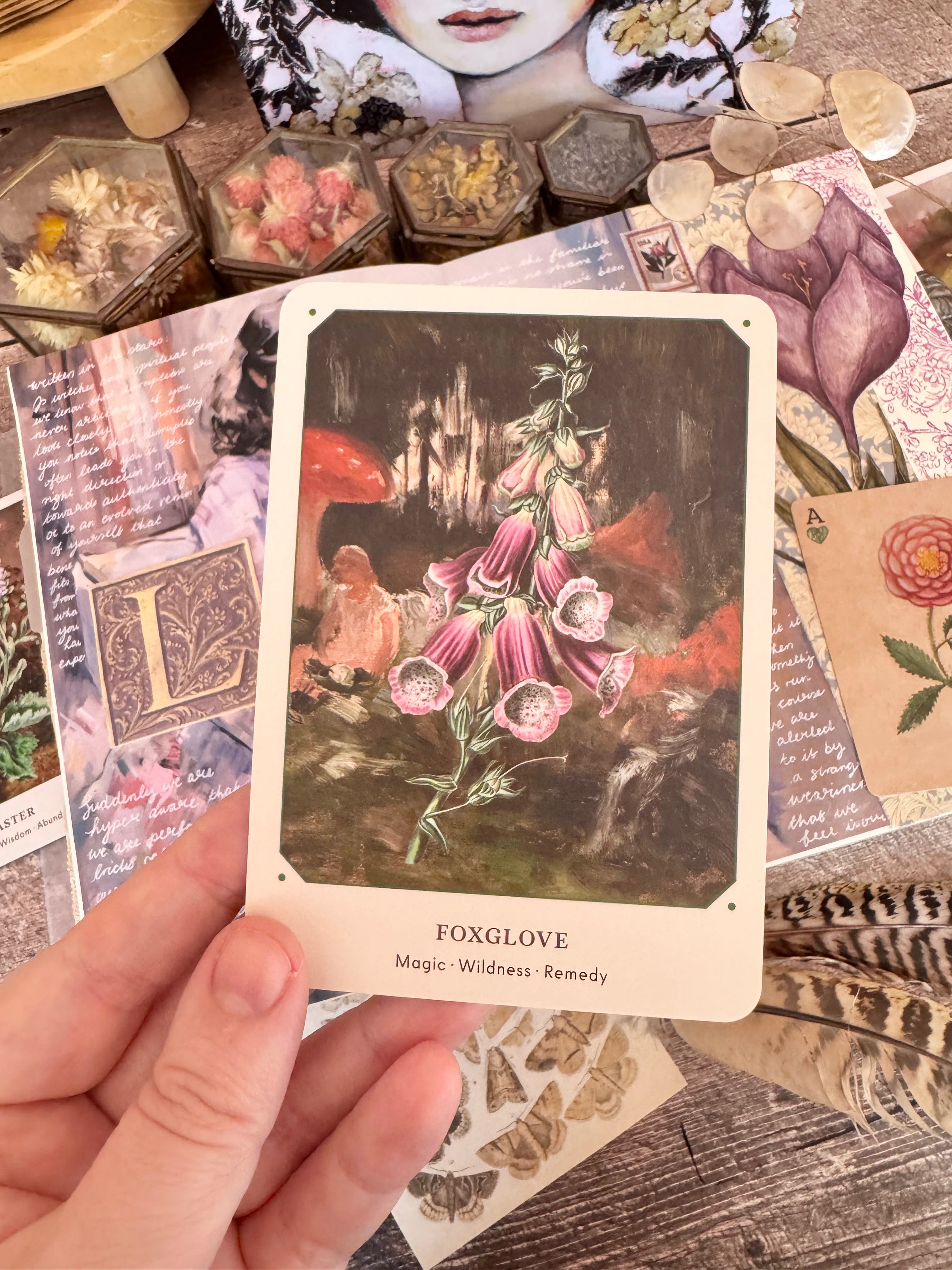
But how?
How do we start modernising a centuries old craft? There is a big temptation to turn this practice into a checklist, and I see them all the time online in the ‘five plants to grow for witchcraft’ posts. These posts are great for beginners and usually easily digestible, perfect to read quickly over a cup of coffee if you have a casual interest. It is, however, surface level and it does nothing to assist a budding cunning person. You don’t become knowledgeable by following lists, you do so by getting to know each plant slowly, on a physical level, give the plant time to teach you, pick one to study such as Yarrow (nothing fancy, we’re learning about common and easily obtainable plants, not rare orchids), and then commit yourself to getting to know it for an entire growing cycle. Grow it, if you can, nurture it, press it, crush it, smell it, burn it, drink it in a tea, use it in a salve. After a year you would have gained more insight than you would have done from just reading a flashcard about it, you will be cunning in it.
Another part of this practice is to really get to know the plants in your area, if you have access to a park, a wood, a hill, a beach etc then you will have access to the flora that grows there. List what you spot and then month by month add your seasonal observations. Grab yourself a plant identification book to make studying easier, even plant apps are great, our wort cunning ancestors would have loved to have had the tools that we have in modern times!
It is also a great idea to pick up and study a skill linked to cunning work, this could be learning to extract oils, how to dry herbs properly, how to make tinctures, salves, balms etc. Don’t just exist in theory, learn practically by focusing on one skill at a time, soon you’ll be filling your cupboards with homemade cosmetics and medicines.
A bit of heresy to close on….
You do not need to be, or call yourself a witch in order to do this sort of work, you don’t need to label it at all, wort cunners were often just the women down the road who knew a lot about plants, or a man who could make your cow well again.
If witch is the word you want to use then that is fine too, it is the word I use, but if it feels a bit to serious and heavy then put a pin in it for now and come back to it another time to see how it feels when you wear it.
If you have any wort cunning advice please feel free to share it with me either in the comments, or give me a message!
Laura ♉︎
P.S Please excuse any typos in this, it is HOT in the UK today and I am melting onto my keyboard…
This really resonated with me! I love learning about and working with plants and also find the folk history and uses interesting, but the term witch just doesn't feel right to me, for whatever reason. Probably won't walk around calling myself a wort cunner, but the practice you describe feels exactly right. Nettle is the plant I'm focusing on building a relationship with right now, but am always trying to stay curious about everything around me!
Another timely and most excellent post Laura. I have been completely out of sorts for the last 10 days due to the large machines digging into the earth and the tree cutting that is happening next door to our apartment building. It’s breaking my heart. I recently planted herbs in pots in my little one bedroom apartment and I just sit with them and touch them and talk to them. I am going to wait awhile before doing any harvesting though. I just want to let them exist as they are. I wish there was something I could do for the fallen trees and the land. Any advice would be most welcome 🙏🏻